

Купить Morhval: Ravenglaire

Morhval: Ravenglaire is an old-school first-person sandbox RPG. Explore a procedural province, take contracts, delve into dungeons, master weapons and magic, trade, survive, and shape your own life in an unforgiving low-poly world.

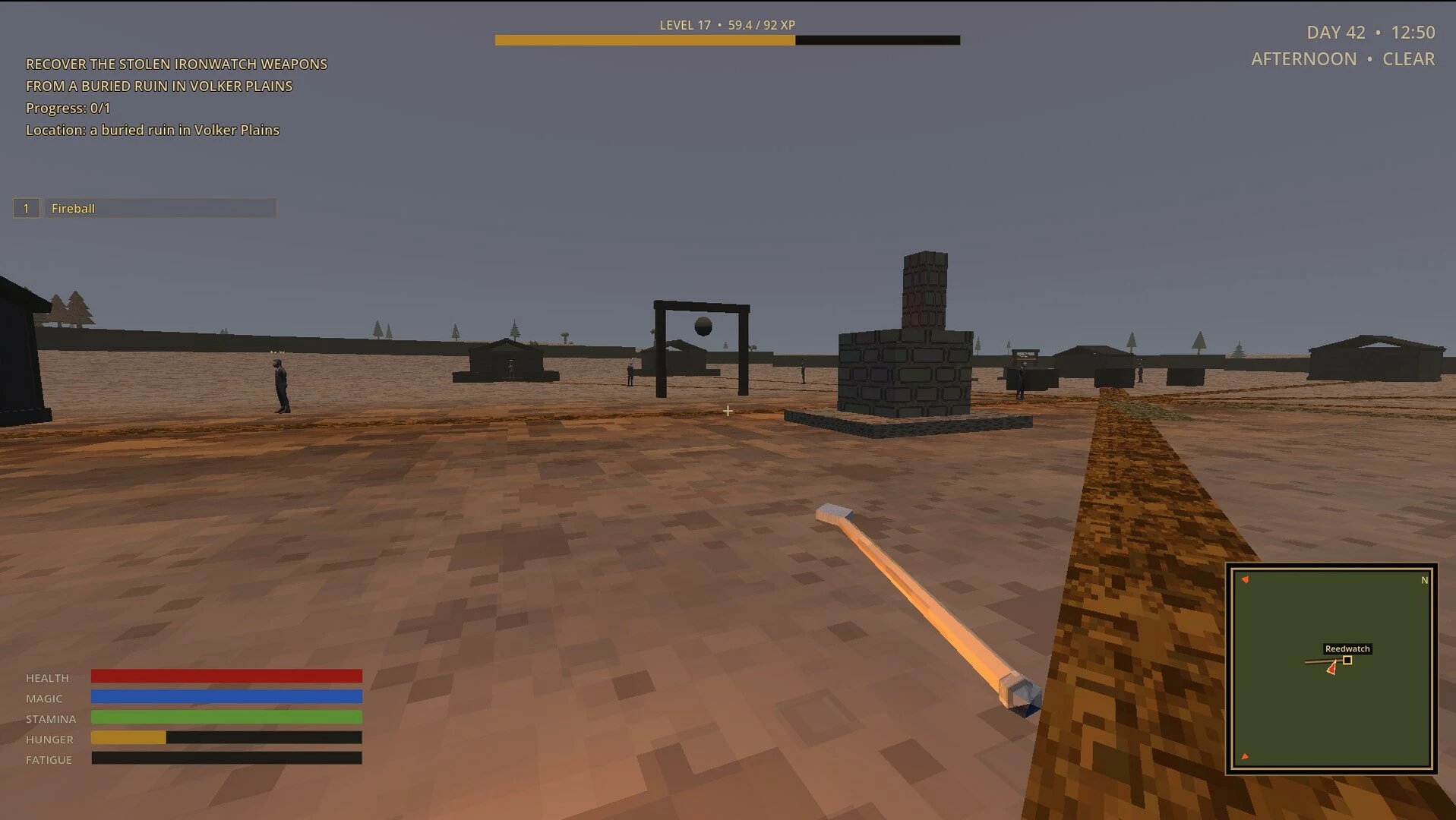
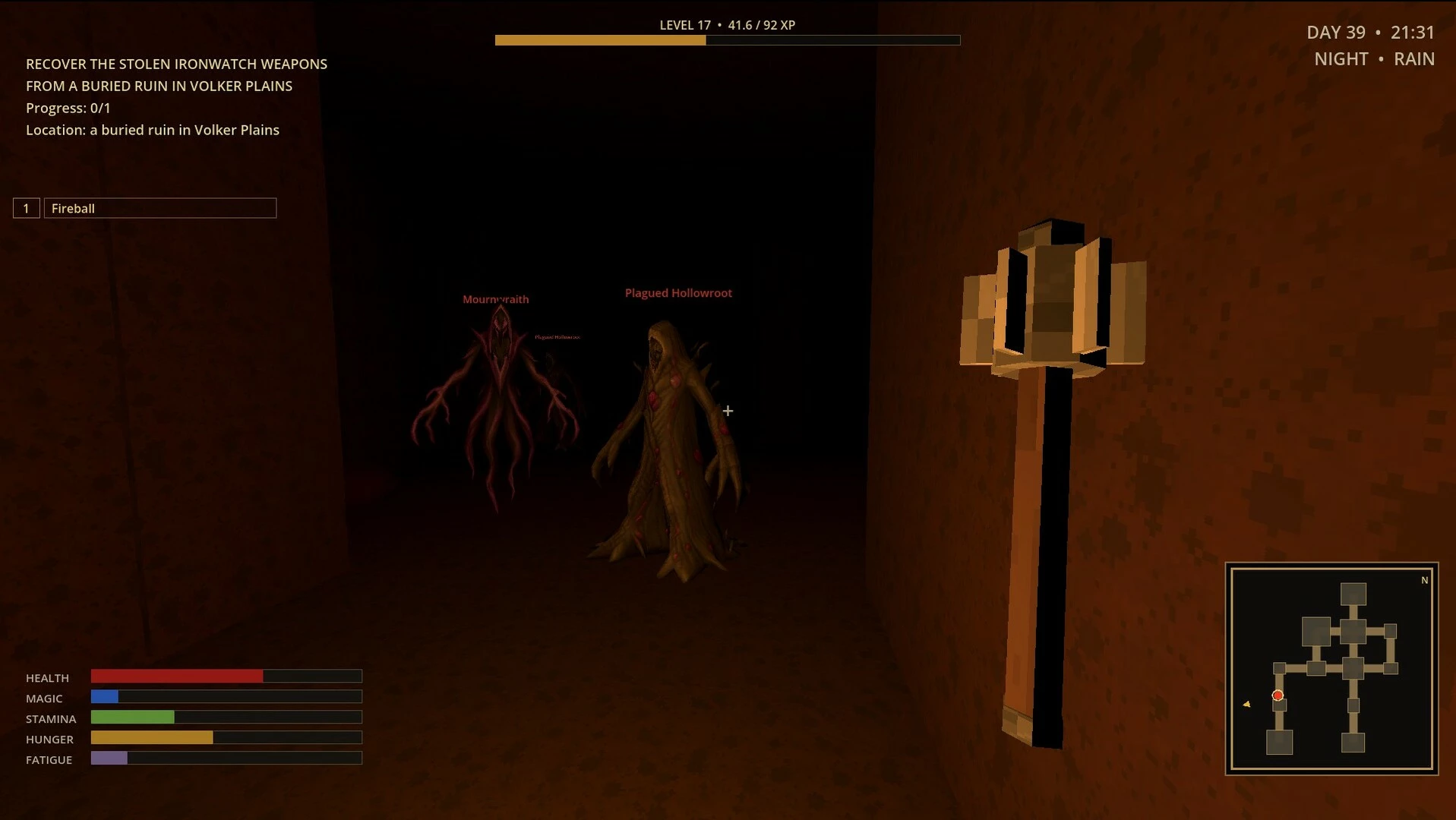
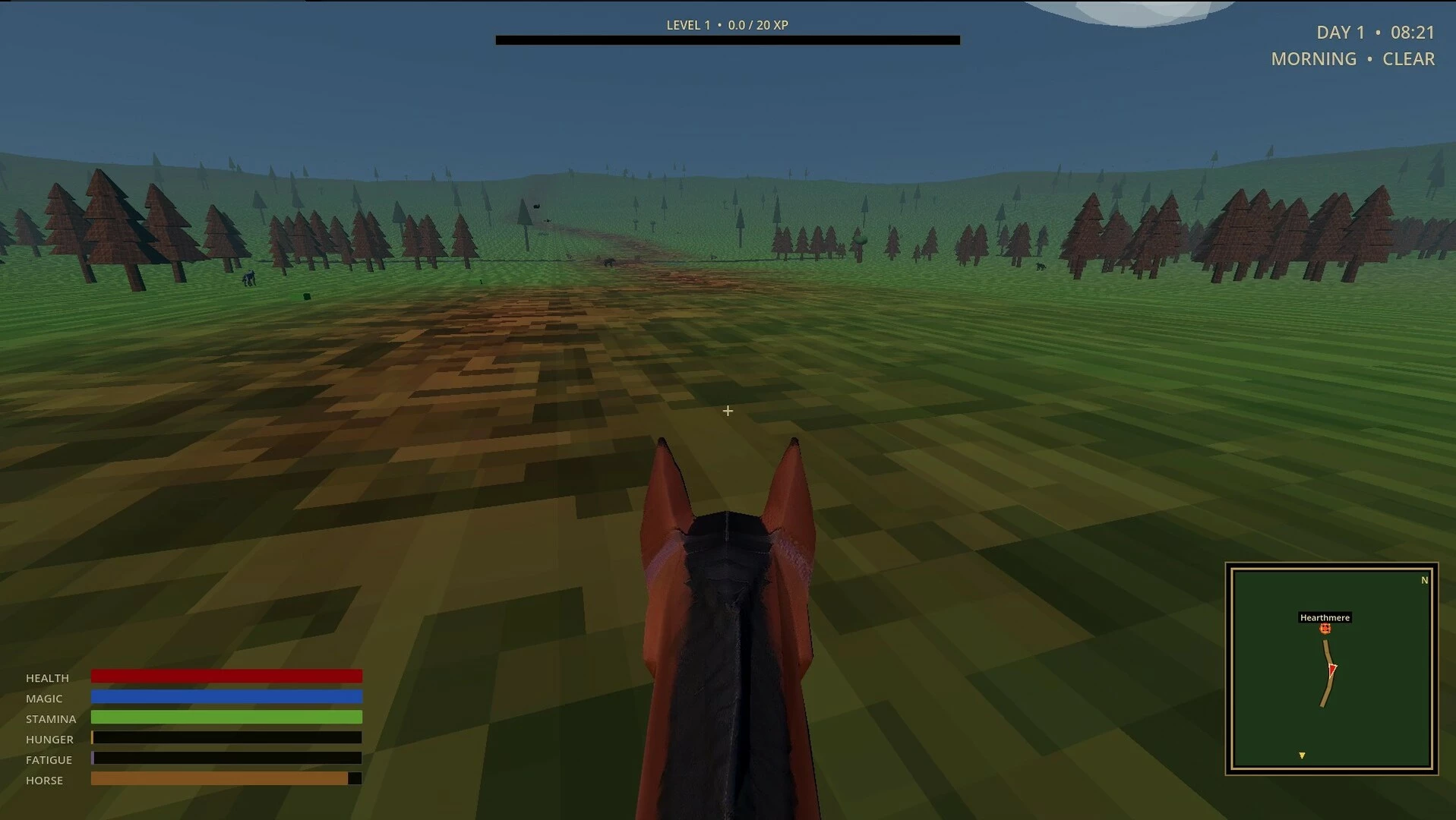
BUILD A LIFE IN A PROVINCE WHERE EVERY PATH IS YOURS
Morhval: Ravenglaire is a first-person open-world role-playing game built around exploration, consequence, survival and interconnected systems. Inspired by the freedom and unpredictability of classic sandbox RPGs, it places you in a large, dangerous province where work, family, reputation, crime, magic and simple survival can matter as much as defeating monsters.
You begin at eighteen years old in the village of Hearthmere. Your parents have given you what little equipment and money they can spare, but the family pantry is running low. From there, your life is yours to shape. Ride toward a distant tavern in search of work. Study forbidden magic. Join a mercenary order. Become a thief. Buy a farm. Feed your family. Hunt monsters. Carry freight between settlements, Help people, exploit them, deceive them, or simply disappear into the wilderness. There is no single correct way to live in Ravenglaire.
A LARGE PROCEDURAL PROVINCE
Ravenglaire covers approximately 250 km² and is regenerated for each new campaign while preserving its major authored story locations. Roads, settlements, taverns, lakes, wilderness sites, faction branches, abolitionist camps, events, points of interest and dungeons are distributed from the campaign seed, giving every journey a different geography. The province contains more than eighty dungeons, more than one hundred points of interest, dozens of settlements, many taverns, a long road network, the Nareth River and its crossings, lakes, coastlines and remote wilderness.
Travel through distinct regions including:
The cold forests and high plateau of Hollow Pines
The wet, corrupted woods of Blackroot
The open Volker plains and dry savannas
Thorn steppe and semi-desert frontiers
The Redglass deep desert
Grey eastern highlands and cold mountain forests
The Pale Verge at the edge of the snow
The green banks and oases of the Nareth River
A western coast with beaches and ocean fishing
Procedural settlements are more than repeated clusters of houses. They can develop around agriculture, herding, hunting, logging, quarrying, trade, military activity or apothecary work. Their economy affects their buildings, merchants, available work, local demand and the character of the people who live there. Settlements may also follow different social policies and respond differently to your actions.
CREATE A CHARACTER
Choose from Warrior, Rogue, Ranger, Alchemist or Occultist, or create a custom class by selecting your own strengths and weaknesses. Your character is defined by six attributes:
Strength
Agility
Intelligence
Endurance
Charisma
Speed
Twenty-four skills cover weapons, armor, stealth, persuasion, lockpicking, six schools of magic and practical professions such as alchemy, farming, cooking, fishing, mining and smithing. Skills improve through use. Fighting with a bow makes you better with bows. Brewing potions develops Alchemy. Working crops develops Farming. Dialogue, crafting, exploration and combat all feed the same character progression rather than existing as isolated minigames.
Skill checks use a visible d20-based system influenced by your skill, attributes and circumstances. Reaching new character levels grants attribute points, while mastering selected disciplines to 100 unlocks Prestige training. Individual spells, weapons, potions, meals and crops can be specialized through up to three Prestige levels, improving their power or efficiency at the cost of time, gold and a portion of the relevant skill.
FIRST-PERSON COMBAT WITH DISTINCT WEAPONS
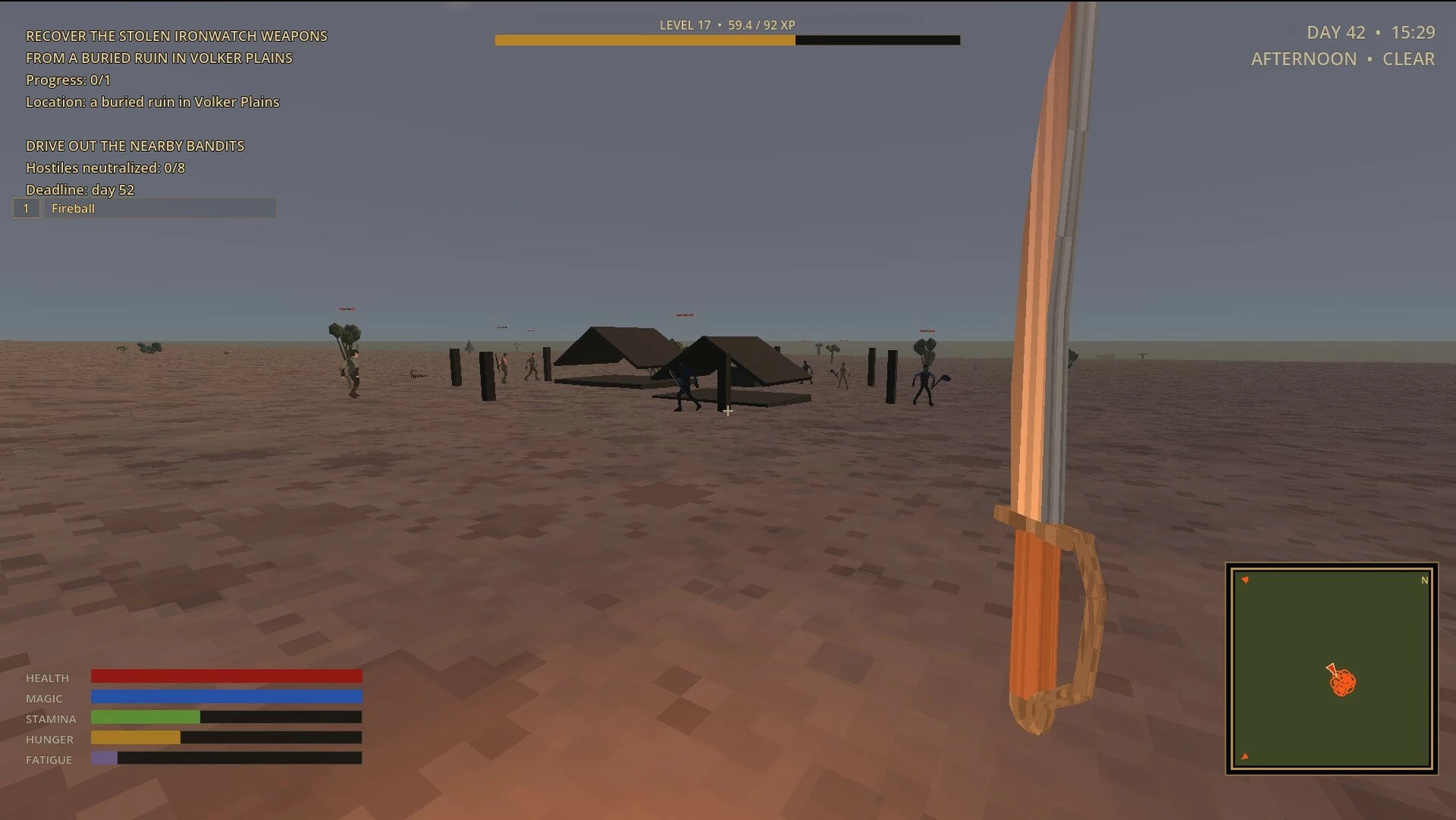
Fight in real time using short weapons, long weapons, blunt weapons, bows, crossbows or your fists. Weapons differ in reach, recovery time, stamina cost, impact, draw speed and critical affinity rather than functioning as cosmetic copies of one another.
Use knives, swords, spears, axes, maces, hammers, staves and specialized unique weapons
Draw bows manually and consume physical arrows
Reload crossbows between shots
Manage stamina while attacking, blocking, sprinting and traveling
Use Agility, armor and movement to avoid or survive incoming attacks
Crouch and move quietly to reduce detection
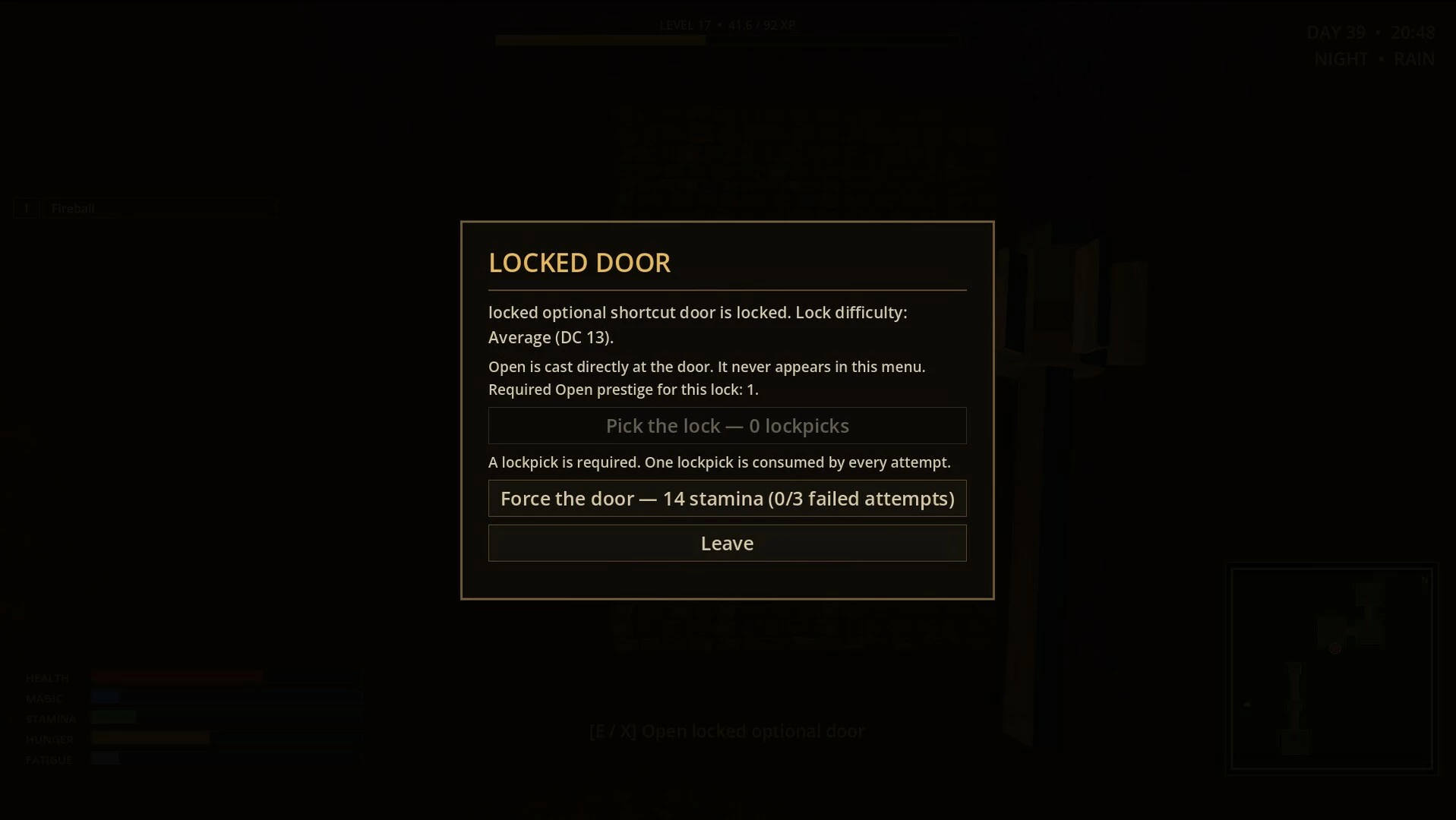
Pick locks, steal from containers and pickpocket NPCs
Coat weapons with alchemical poisons
Enchant weapons with fire, frost, lightning or life-stealing effects
Enemies include wildlife, bandits, raiders, cultists, necromancers, battle mages, undead soldiers, Grave Thralls, spiders, scorpions, cave worms and stranger creatures such as Mournwraiths, Hollowroots, stone guardians and anomalous manifestations. Some enemies summon allies, spread conditions, use spells, fight at range or require a different approach from ordinary animals and human opponents. Equipment has individual durability. Two copies of the same sword can have different condition, maximum condition and quality. Weapons, armor and tools wear down, can break, can be repaired with kits or by professionals, and can be fully restored at a forge.
MORE THAN FORTY ACTIVE SPELLS
Magic is divided into six schools:
Firecraft
Frostcraft
Stormcalling
Vitalism
Necromancy
Conjuration
Spells are not limited to differently colored projectiles. The magic system supports direct rays, missiles, cones, chained lightning, walls, persistent fields, summoned creatures, bound weapons, healing, regeneration, shields, movement abilities, detection, remote interaction, corpse manipulation, resurrection, banishment and battlefield control. Learn formulae from teachers and merchants, study individual spells to improve their efficiency, assign favorites and combat hotkeys, and specialize particular spells through Prestige.
High Athenaeum standing unlocks a personal spell-combination system. Combine two or three known official spells, choose an intensity, name the result and create a permanent custom formula. Compatible secondary effects are adapted to the primary spell’s delivery form, allowing combinations such as harmful traits on summoned creatures, elemental effects on bound weapons or mixed control and damage spells. A character may preserve up to twelve personal formulae in their spellbook.
PROCEDURAL DUNGEONS AND PHYSICAL EXPLORATION
Ravenglaire contains natural caves, mines, crypts, ruins, cisterns, buried courts, wells, chapels, monster dens and other dungeon archetypes. Their themes, inhabitants, resources and layouts change with the world seed. Dungeons can contain multiple floors, locked doors and chests, traps, corpses, ore veins, hostile camps, quest objectives, hidden valuables and themed treasure caches. Enemies persist, containers remember what was taken, and contracts can place specific targets, rescue objectives or recovered property inside existing locations. Explore for treasure, mine rare ore, follow rumors, complete organization assignments or enter simply because a dark opening appeared beside the road.
SURVIVAL, REST AND DISEASE
Ravenglaire is dangerous even when nobody is attacking you.
Hunger and fatigue rise over time
Sprinting, training and travel consume physical resources
Weather and environmental exposure affect survival
Poison and temporary conditions can weaken the character
Diseases such as grave fever, rotting wounds, arcane static, anomalous tremors and flu persist until cured
Potions, Vitalism and apothecaries can treat different conditions
Camp in safe wilderness locations or use rented and owned beds
Sleep until healed, manage food before resting and gain a temporary Well Rested bonus from proper beds
Carry a lantern into dark interiors and nighttime roads
YOUR FAMILY NEEDS YOU
Your parents remain part of the simulation after the opening. Their household consumes food every day, and the family pantry must be supplied. You can bring provisions home, send food from your inventory, pay merchants to deliver supplies, establish longer supply agreements and use limited family credit when resources run out. Hunger can weaken your parents, create debt and eventually cause permanent consequences if ignored for too long. You may also abandon them to their fate—but be prepared to live with the consequences. The family system turns ordinary work into something personal. A fishing trip, hunting contract, harvest or profitable freight run may matter because there are only a few days of food left at home.
WORK, CRAFT AND BUILD A HOME
Ravenglaire supports several practical ways to make a living:
Alchemy: Gather ingredients, learn recipes and brew healing potions, mana restoratives, antidotes, disease cures, poisons, environmental wards and powerful elixirs.
Mining: Extract coal, iron, copper, silver, Blackroot ore and rarer materials from the world and its dungeons.
Smelting and Smithing: Turn ore into ingots, forge weapons and armor, craft tools and repair equipment.
Cooking: Prepare bread, soups, stews and other meals using gathered, farmed or caught ingredients.
Farming: Plant, water, tend and harvest crops; save seeds and improve yields through skill and Prestige.
Fishing: Fish in rivers, lakes, ponds and the ocean, with different catch sizes and skill checks.
Enchanting: Apply magical effects professionally or attempt your own enchantments through skill-based tests.
Buy houses, claim an abandoned farm or purchase settlement property. Choose a primary residence, store equipment and resources, invite an eligible partner to live with you and commission improvements over several in-game days. Available improvements include additional gardens, chicken coops, pigsties, herb gardens, expanded pantries, household alembics, smelters, forges, enchanting tables, stables and fishing ponds. Different properties have different space and terrain restrictions, so not every improvement fits every home.
A WORKING ECONOMY
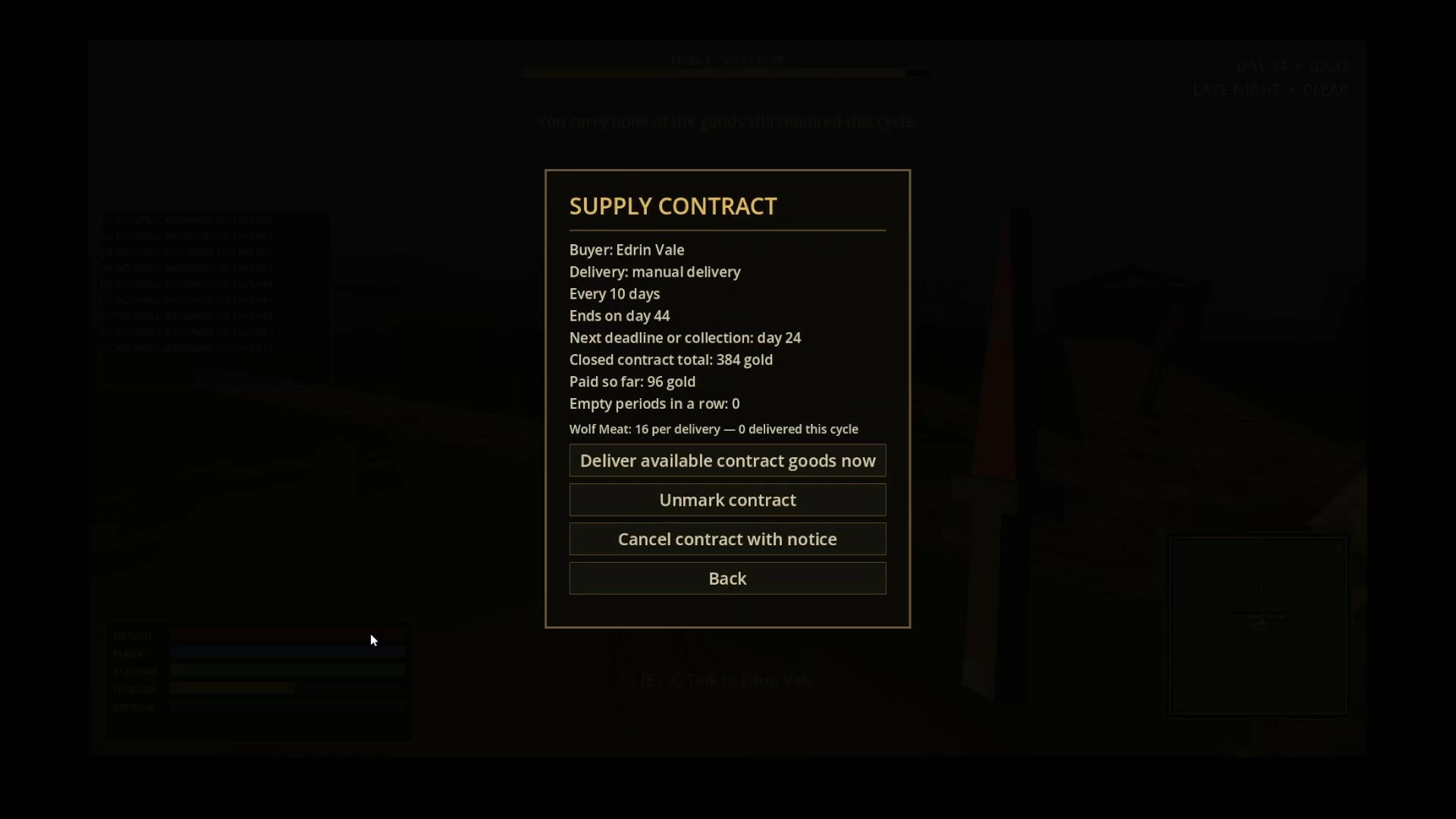
Merchants maintain their own stock and buy different categories of goods. Item condition affects value, settlement economies affect demand, and the same character can earn money through exploration, crafting, trade, property production or organized work. Create supply agreements with residents and businesses. Accept standard offers or propose custom quantities, intervals, duration and prices. Buyers may accept, reject or make a counteroffer. Deliver goods manually, produce them from owned property or build a longer economic relationship through reliable fulfillment. Settlements can also offer loans. Debt accumulates when ignored, and property may become part of a settlement if you choose to resolve a serious obligation through ownership rather than gold.
HORSES, WAGONS AND LONG-DISTANCE TRAVEL
Travel is a major part of life in Ravenglaire.
Buy, sell and own multiple horses with different speed, strength, endurance and appearances
Choose an active horse and call it to your position
Ride normally through the physical world
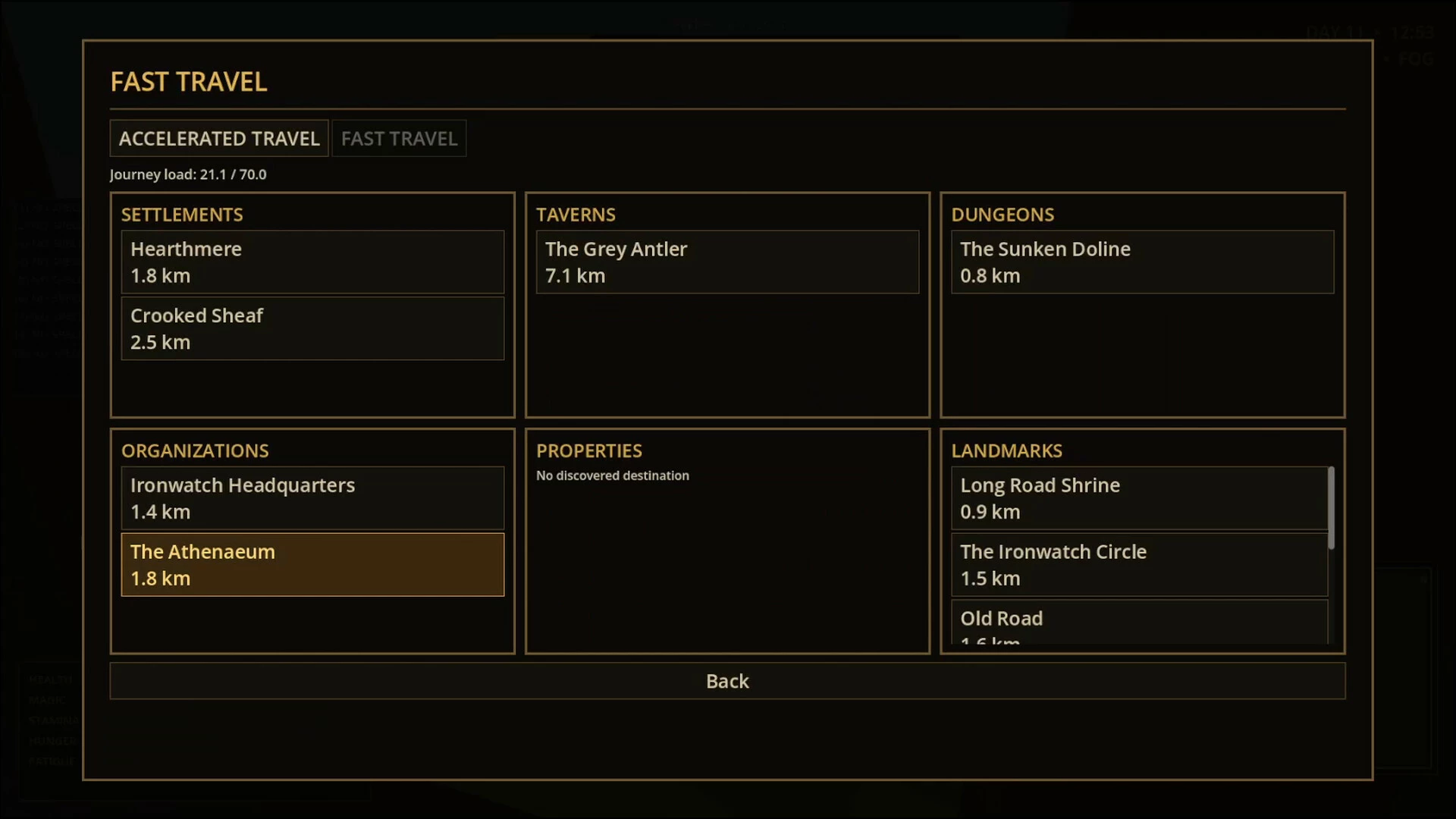
Use accelerated travel while the landscape continues to pass around you
Use fast horse travel to known destinations when appropriate
Manage horse energy during journeys and allow animals to recover through time and rest
Buy a wagon and install it behind one of your horses
Accept freight contracts between settlements
Collect visible cargo, carry it across the province and deliver it before the deadline
Balance route length, cargo value, risk and the strength of the horse pulling the load
Travel can be interrupted by roadside events, predators, ambushes, stranded travelers and other encounters. The road is not a loading screen, it is part of the game.
TAVERNS
Roadside taverns have opening hours, innkeepers, food, rentable beds, travelers, rumors and work leads. They act as social and economic anchors across the province.
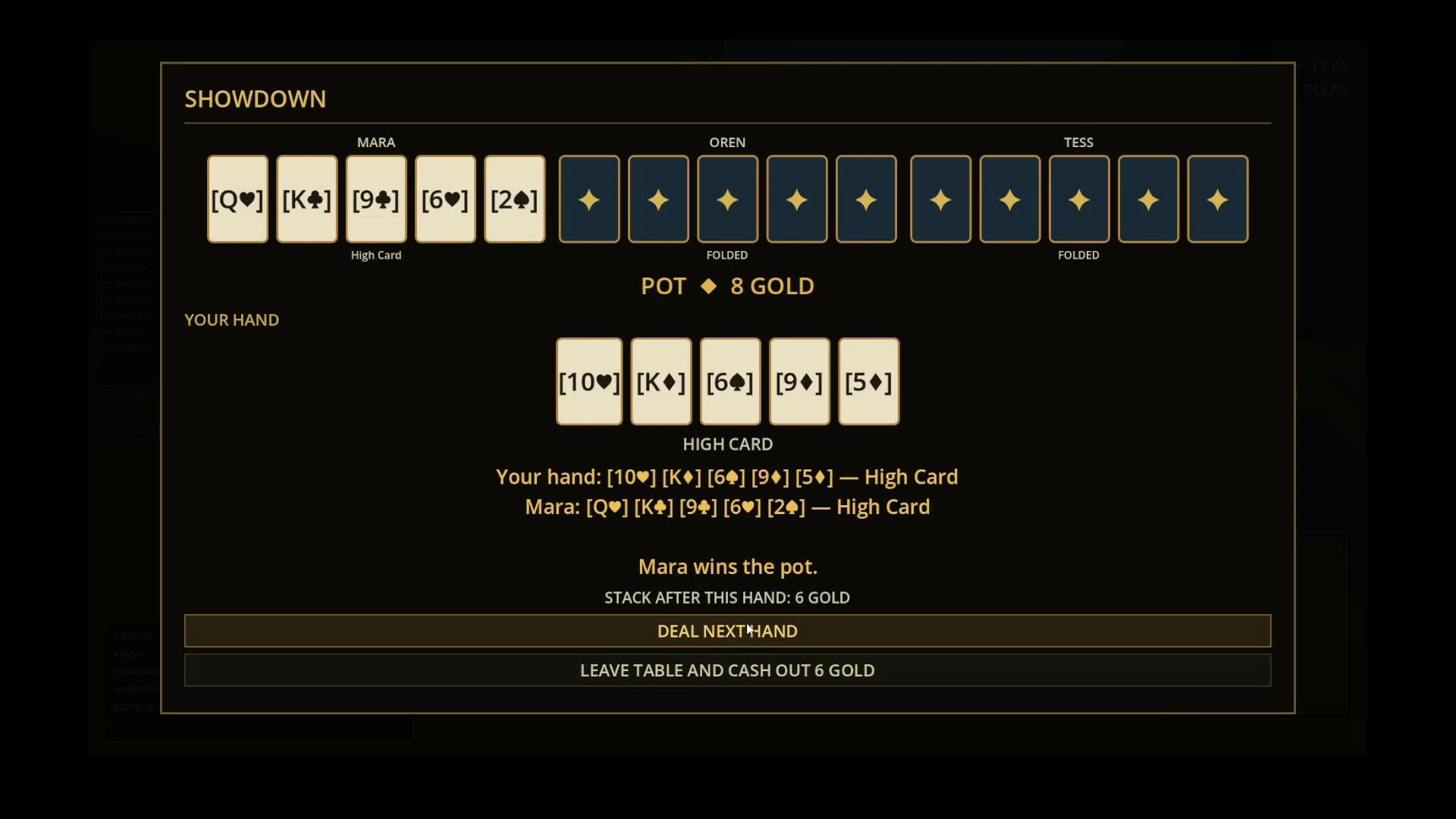
Sit down to gamble using several playable games:
Poker
Blackjack
Five Bones
Crown Dice
Tables have their own bankrolls, wagers and persistent sessions. You can win, lose or cash out rather than receiving a predetermined dialogue result.
PEOPLE, REPUTATION AND CONSEQUENCE
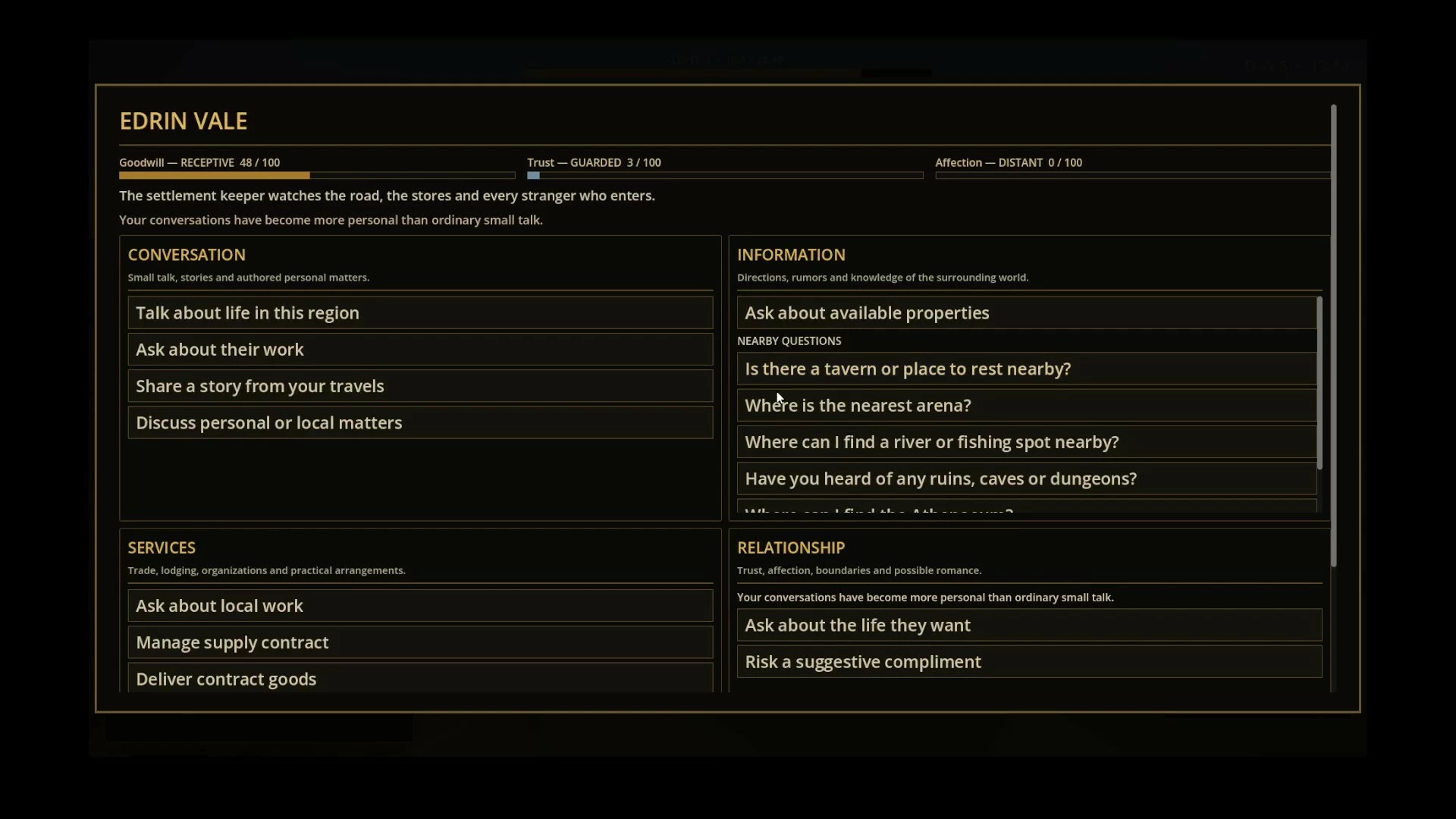
NPCs have homes, workplaces, schedules, factions, professions, knowledge and social memory. Ask for directions, discuss rumors, learn about ingredients and nearby settlements, make small talk, request work or hear about a personal problem. Personal favors can emerge from ordinary conversation. A resident may be telling the truth, exaggerating or manipulating you. You can investigate, take a side, complete the favor, expose a lie or live with the social consequence of a bad judgment.
Build trust and affection with eligible characters through personal conversations and choices. Relationships can become temporary, committed or domestic, and a partner may be invited to live at an owned residence. The world remembers crimes and hostility. Theft, assault and other offenses can create bounties, cause guards to confront you and make local residents avoid you for a time. Settlements without guards do not remain permanently locked against the player, but communities still react immediately when you violate their rules. NPC deaths, discovered locations, looted containers, defeated dungeon enemies, faction standing, contracts, relationships and quest outcomes persist in the save.
JOIN ORGANIZATIONS WITH DIFFERENT VALUES
Three major organizations provide long-term progression:
The Athenaeum: Magical research, dangerous artifacts, anomalies, spell services and restricted knowledge.
Ironwatch: Mercenary work, monster hunts, settlement defense, military equipment and martial training.
The Blackroad Compact: Theft, extortion, blackmail, lockboxes and criminal influence.
Admission depends on relevant skills. Completing organization jobs raises standing through several ranks, unlocking better contracts, merchants, discounts, services, equipment and specialized rewards. Betrayal, theft from members or repeated violence can lead to discipline or expulsion.
SLAVERY, ABOLITION AND CAPTIVITY
Ravenglaire contains deliberately harsh social systems. Some settlements permit slavery, while others oppose it. Slaver compounds, abolitionist camps, traders, guards, raids, ambushes and reputation systems exist physically in the world. The player may buy, sell or free an enslaved follower, transfer equipment to them, travel and rest with them, or help liberated people reach abolitionist protection. The player may instead work against slavers, raid compounds, release prisoners and build abolitionist reputation—or become notorious enough to attract retaliation.
Hostile groups can also capture the player. Captivity includes confiscated belongings, escape attempts, recovery of equipment and the possibility of waiting for another opportunity rather than treating defeat as an immediate game over. These systems are intended to create uncomfortable choices and lasting consequences, not a morally neutral commodity loop.
AUTHORED STORIES INSIDE A SYSTEMIC WORLD
Alongside procedural exploration and work, Ravenglaire contains authored quest lines with branching outcomes. The opening regions include stories about hunger, family, religion, forbidden letters, illness, political conflict, refugees, plague and the survival of entire communities. Choices are often physical and systemic rather than simple dialogue selections. You may need to search a real room, steal evidence, enter a cellar, track someone through the forest, gather medicine, escort a person beyond a gate, decide what truth to report or return days later to witness the consequence.
Beyond the authored storylines, work can be generated through:
Settlement service contracts
Dungeon clearing and retrieval jobs
Rescue and missing-person assignments
Predator hunts and bandit camps
Deliveries and recovered supplies
Personal favors
Organization contracts
Supply agreements
Freight routes
Abolitionist and slaver conflicts
Arena campaigns
AN EARLY ACCESS SANDBOX BUILT TO EXPAND
Morhval: Ravenglaire is a solo-developed Early Access RPG. Its visual style deliberately embraces low-poly models, coarse textures and the atmosphere of late-1990s 3D games. The focus is on freedom, simulation, replayability and systems that interact with one another.
The current game already supports a large procedural province, authored and generated quests, combat, magic, professions, survival, family responsibility, factions, properties, horses, wagons, freight, relationships, crime, arenas and morally difficult social systems. Development will continue to expand the province, deepen existing mechanics, add content and improve performance and presentation.
- Если не установлен Steam клиент, скачайте его для Windows (клиент также доступен на Mac и Linux) и установите.
- Запустите Steam, зайдите в свой аккаунт или зарегистрируйте новый, если у вас его еще нет.
- При оформлении заказа, предоставьте ссылку на свой профиль в Steam или ваш SteamID состоящий из 18 цифр (765***).
- Ожидайте приглашения от нашего бота (если у вас аккаунт с ограниченными правами) или добавьте бота в друзья (ссылка на бота будет предоставлена после успешной оплаты).
- После того, как вы добавите нашего бота в друзья, игра автоматически (время ожидания обычно составляет не более 5-30 секунд) будет отправлена вам в виде подарка (гифта).
- Примите подарок, добавьте в Библиотеку и нажмите «Играть».









и мы вам напишем, если цена на этот товар снизится