
Купить Planets in a Box

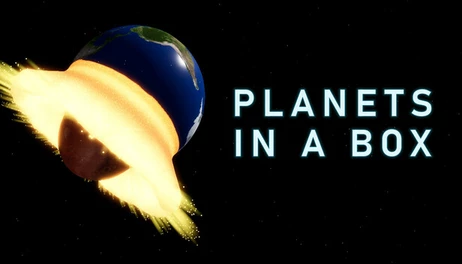
Smash planets together in a real-time physics simulator. Watch a Mars-sized world hit the young Earth, debris spread into a disk and a new moon form, and tides stretch and spin up worlds. Millions of particles on your GPU. Record the raw simulation data and replay from any angle at any speed.

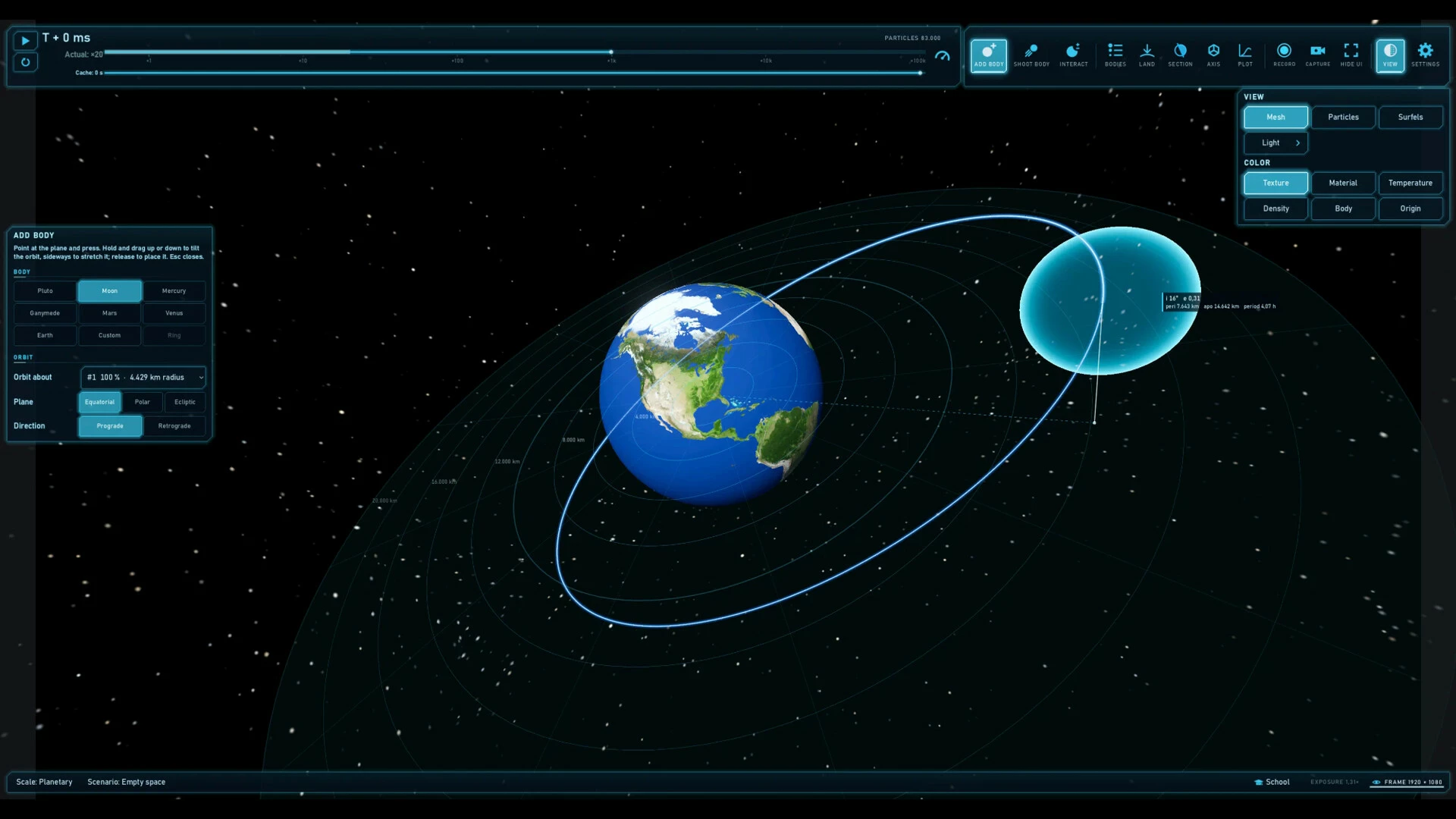
Crash planets into each other and watch what happens.
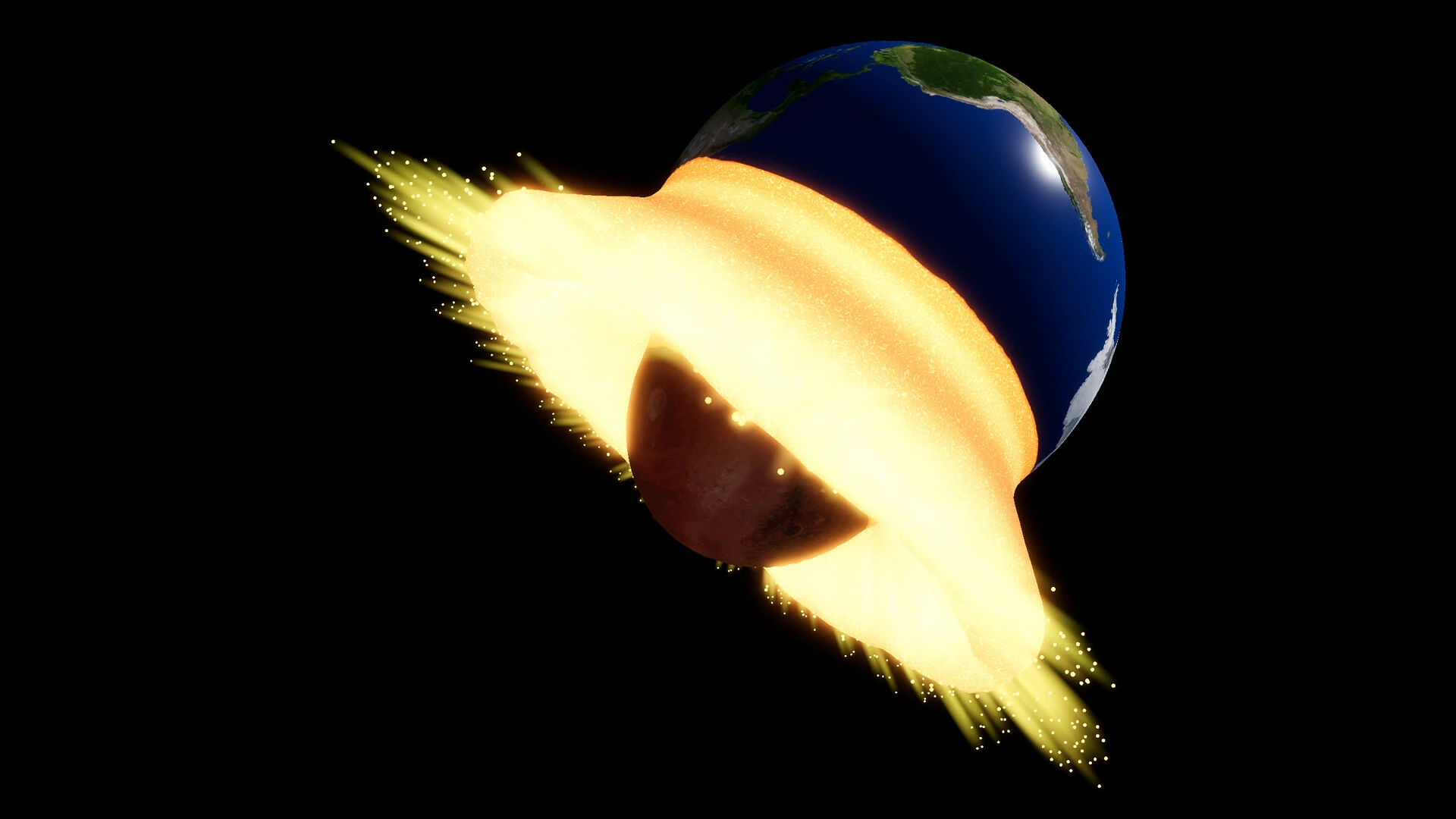
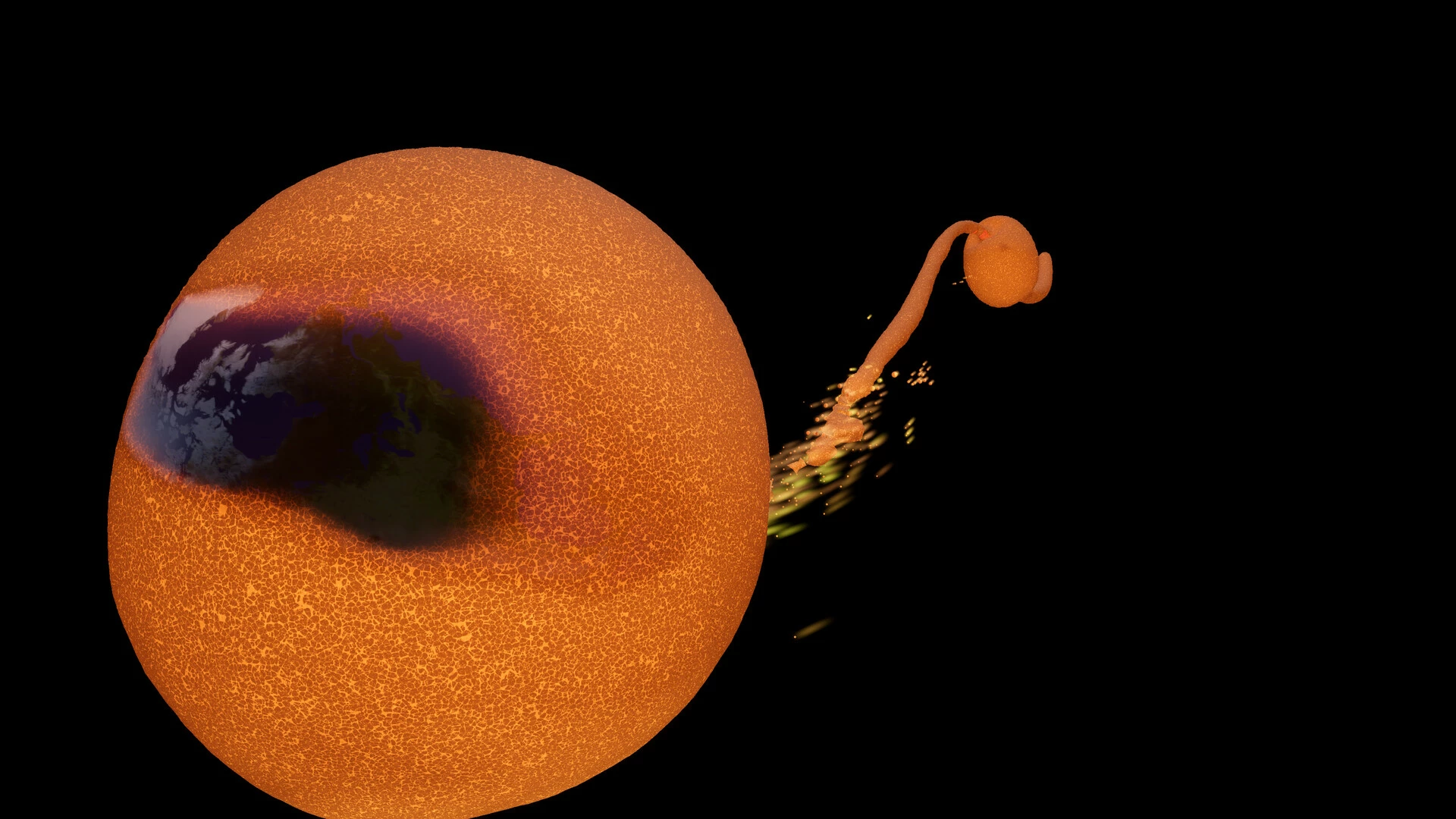
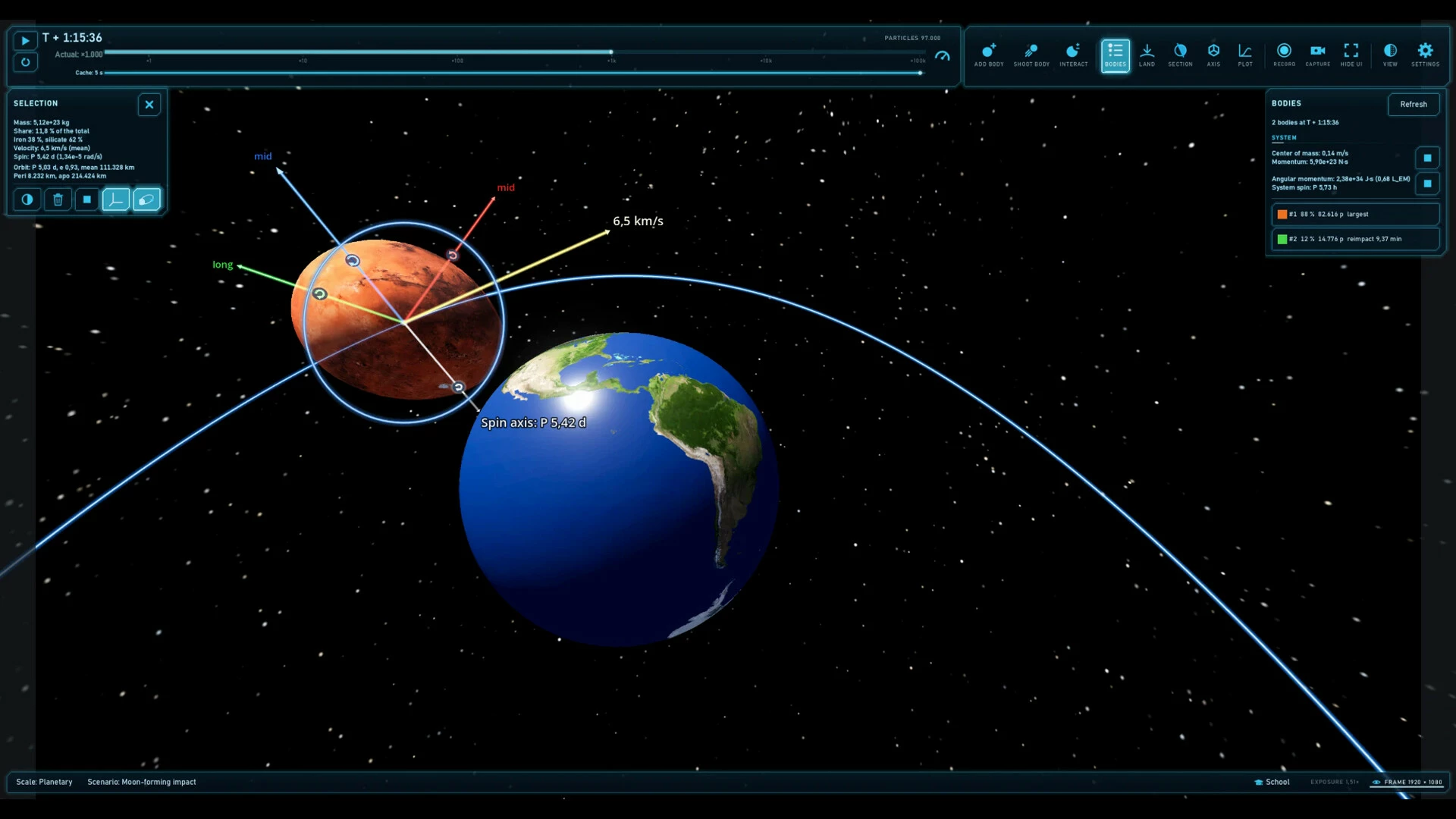
Planets in a Box is a real-time simulator of planetary collisions. Every planet is made of thousands to millions of particles of rock and iron that pull on each other with gravity, collide, heat up and splash. Watch a young Earth get hit by a Mars-sized body, see molten debris spread into a disk and a new moon gather in orbit.
Recreate the birth of the Moon
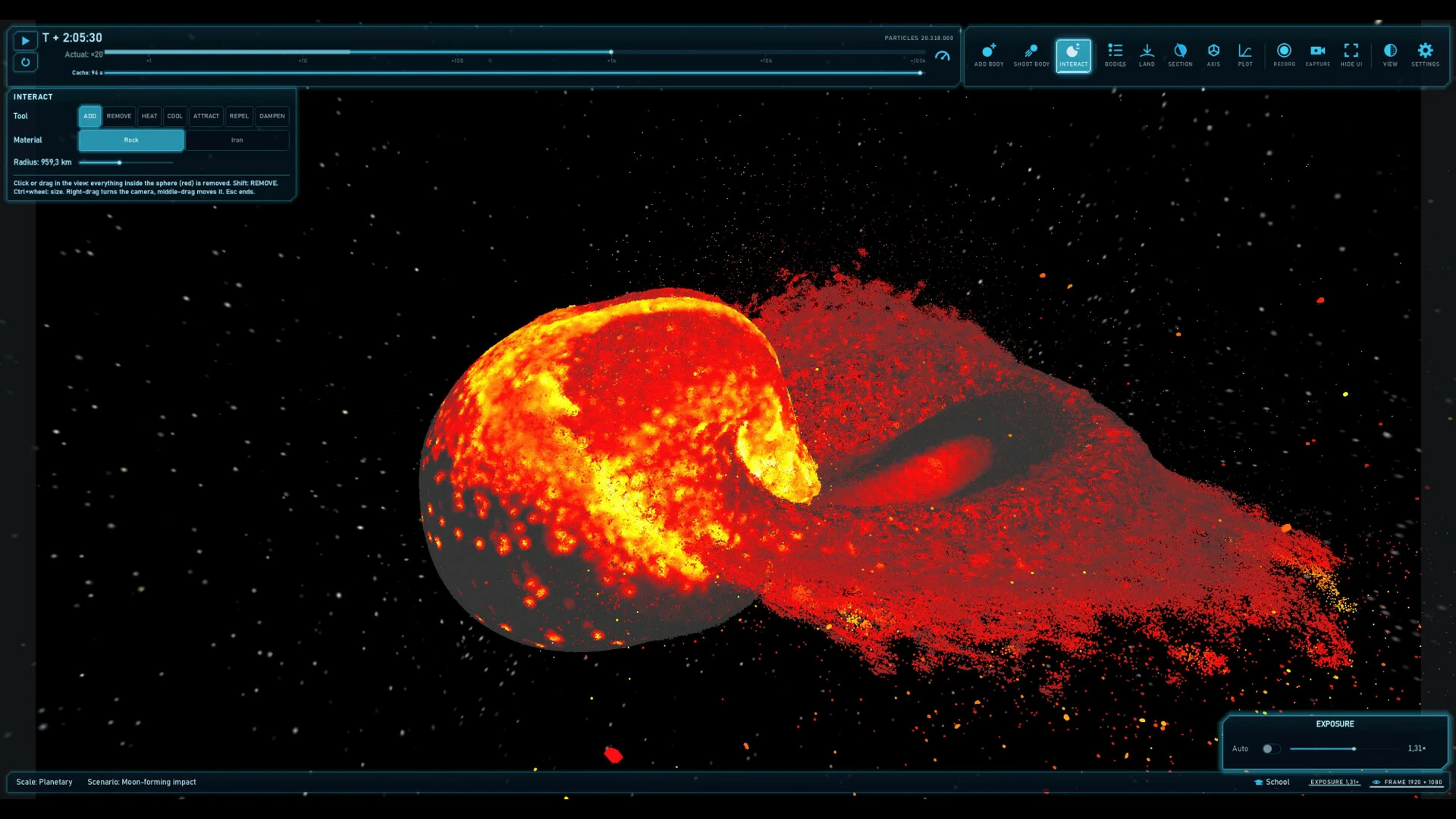
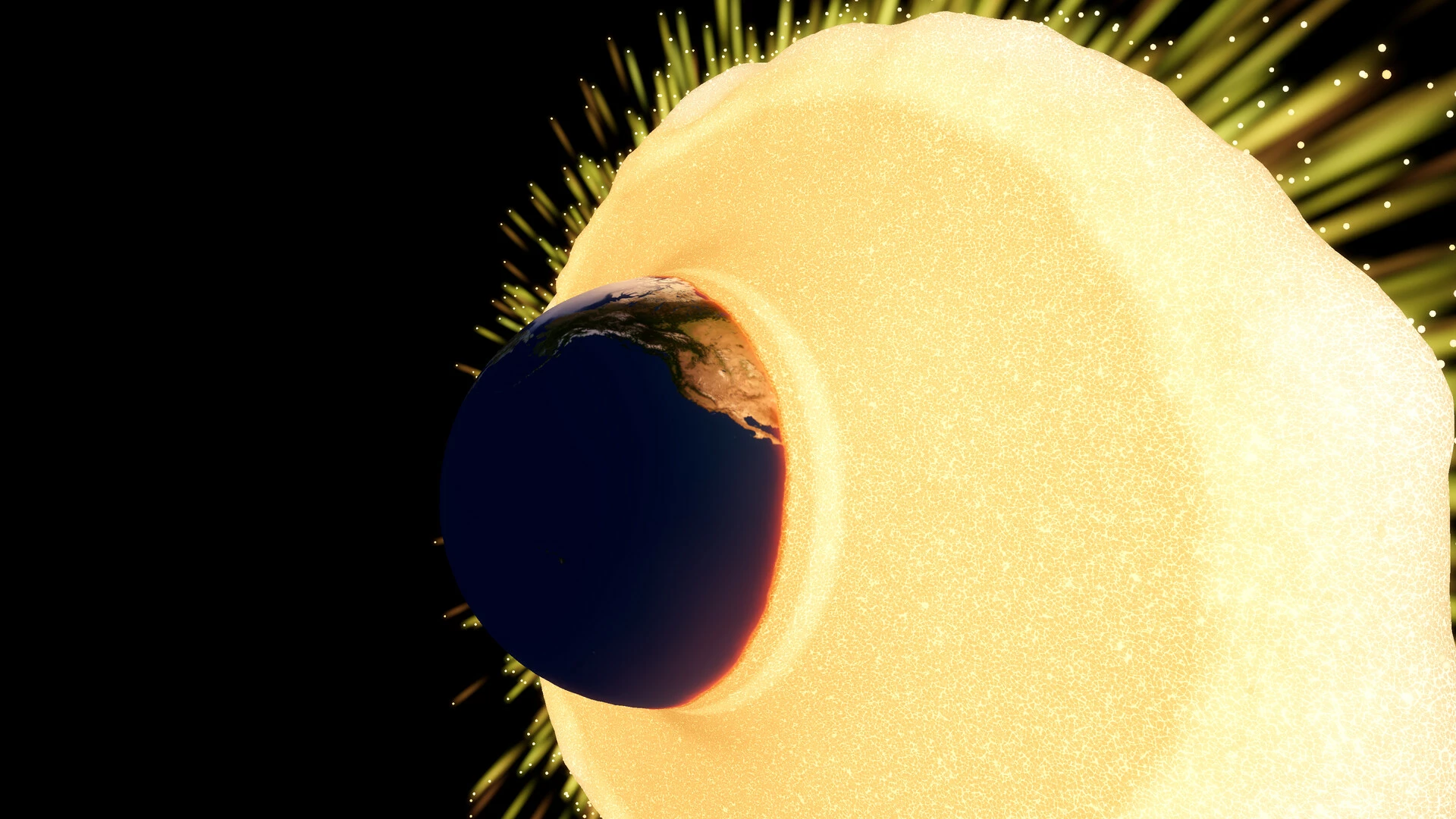
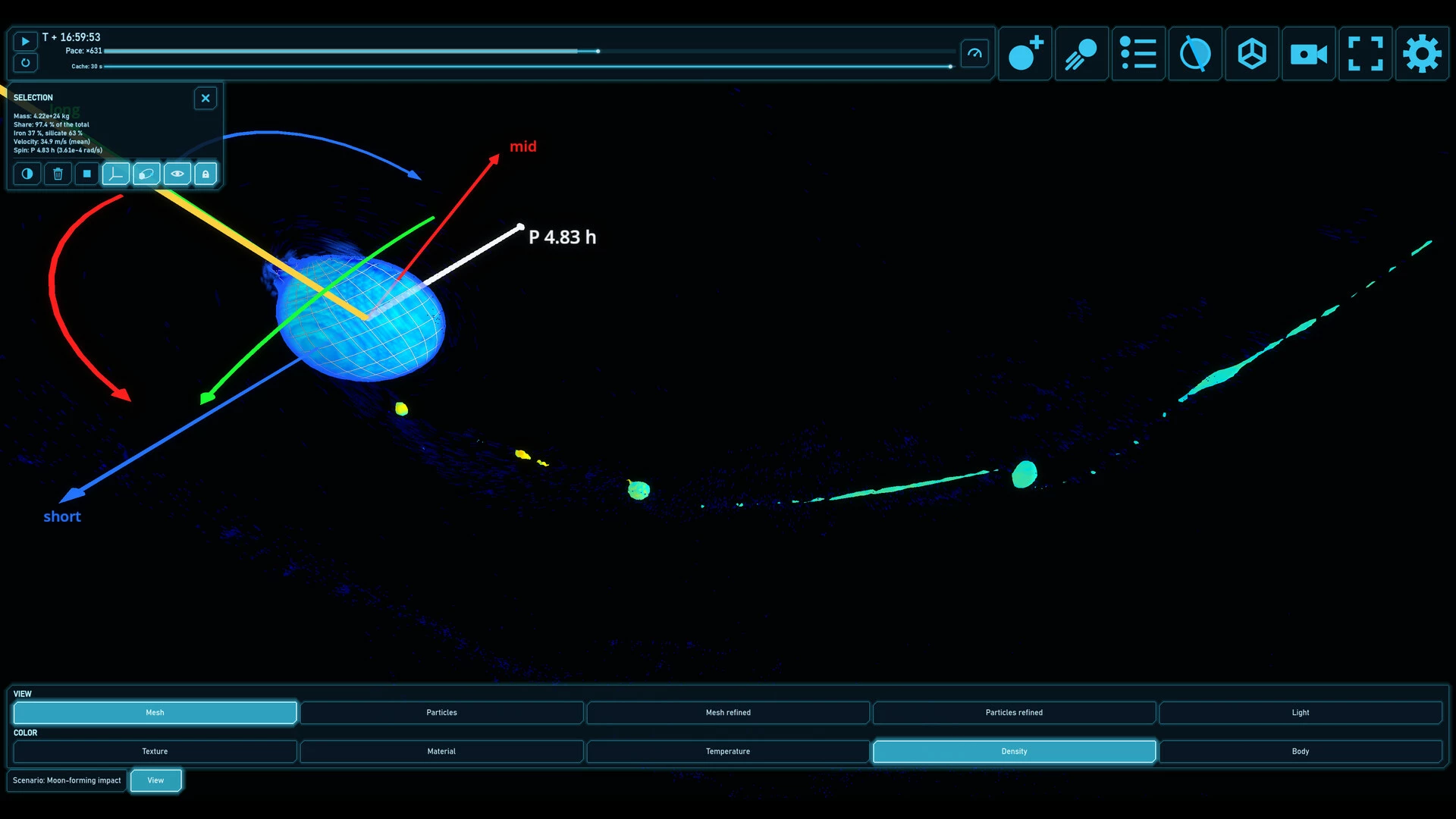
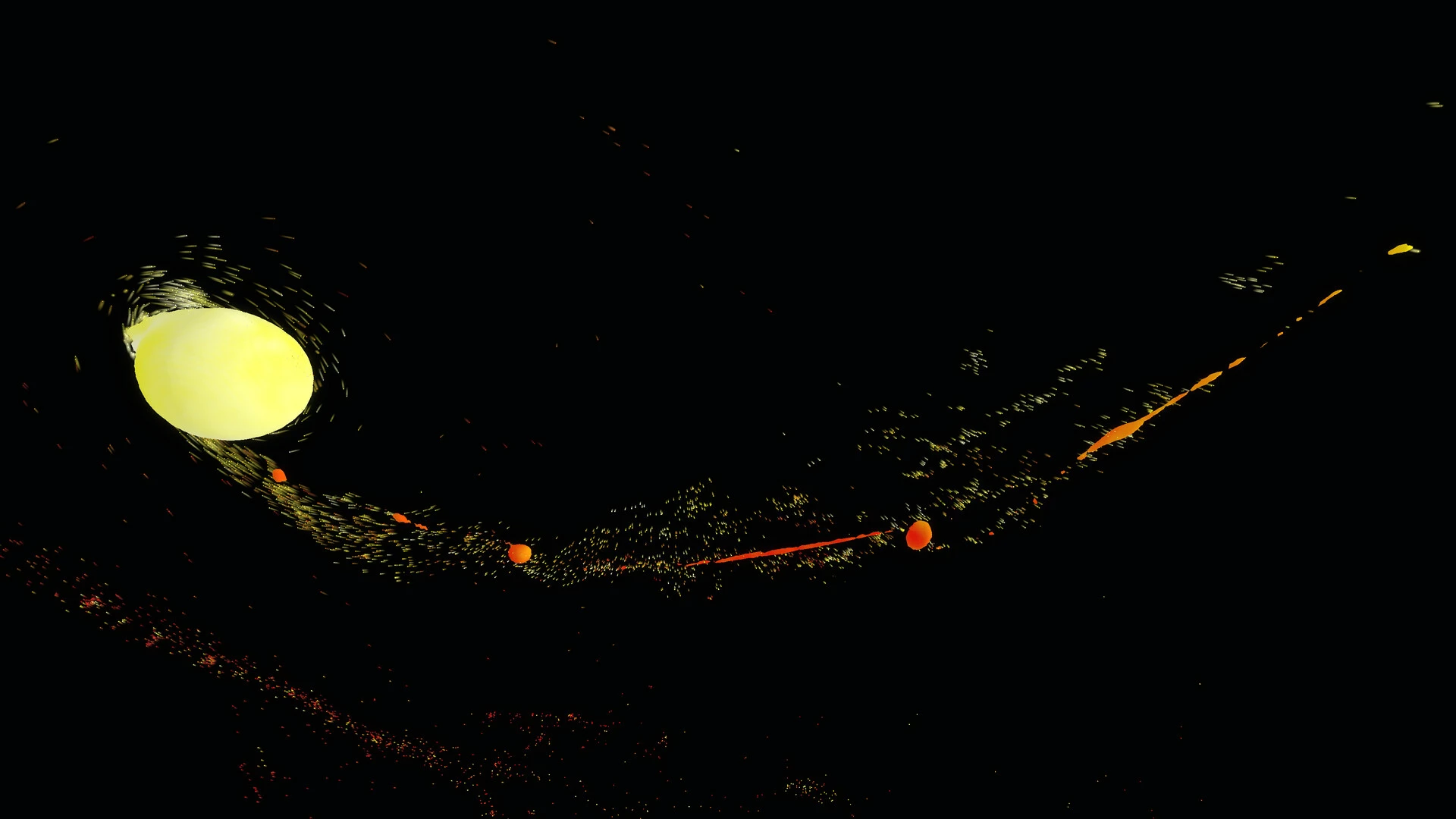
Start with the classic giant-impact scenario: a Mars-sized planet strikes the early Earth at an angle. Follow the impact, the glowing debris and the disk that forms around the planet afterward.
Try your own collisions
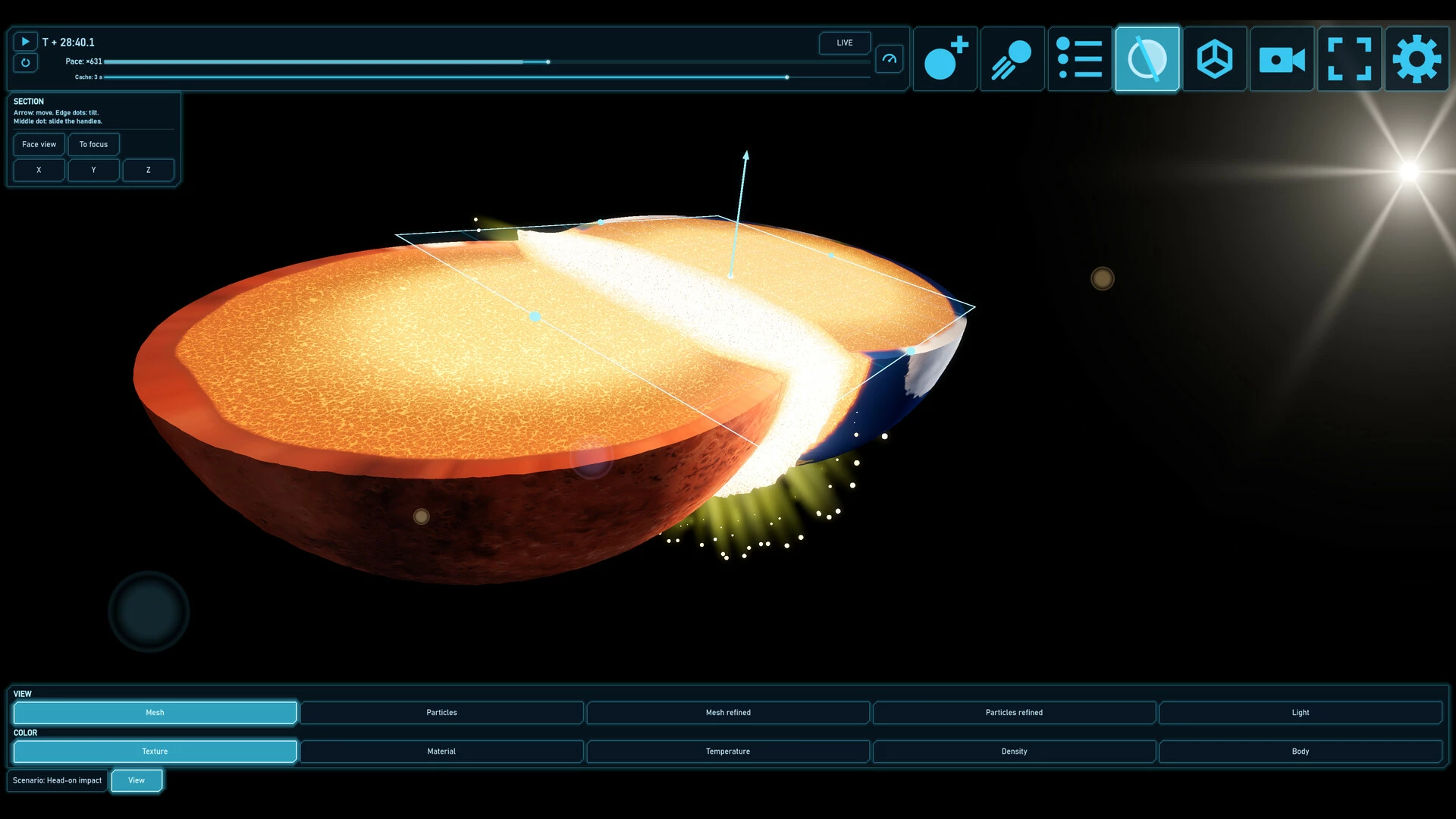
Choose a grazing hit-and-run, a dead-center head-on impact, or a cold, rotating dust cloud collapsing into a planet with clumps in orbit. Change the masses, impact angle, speed, core size and spin before you start.
Watch tidal forces at work
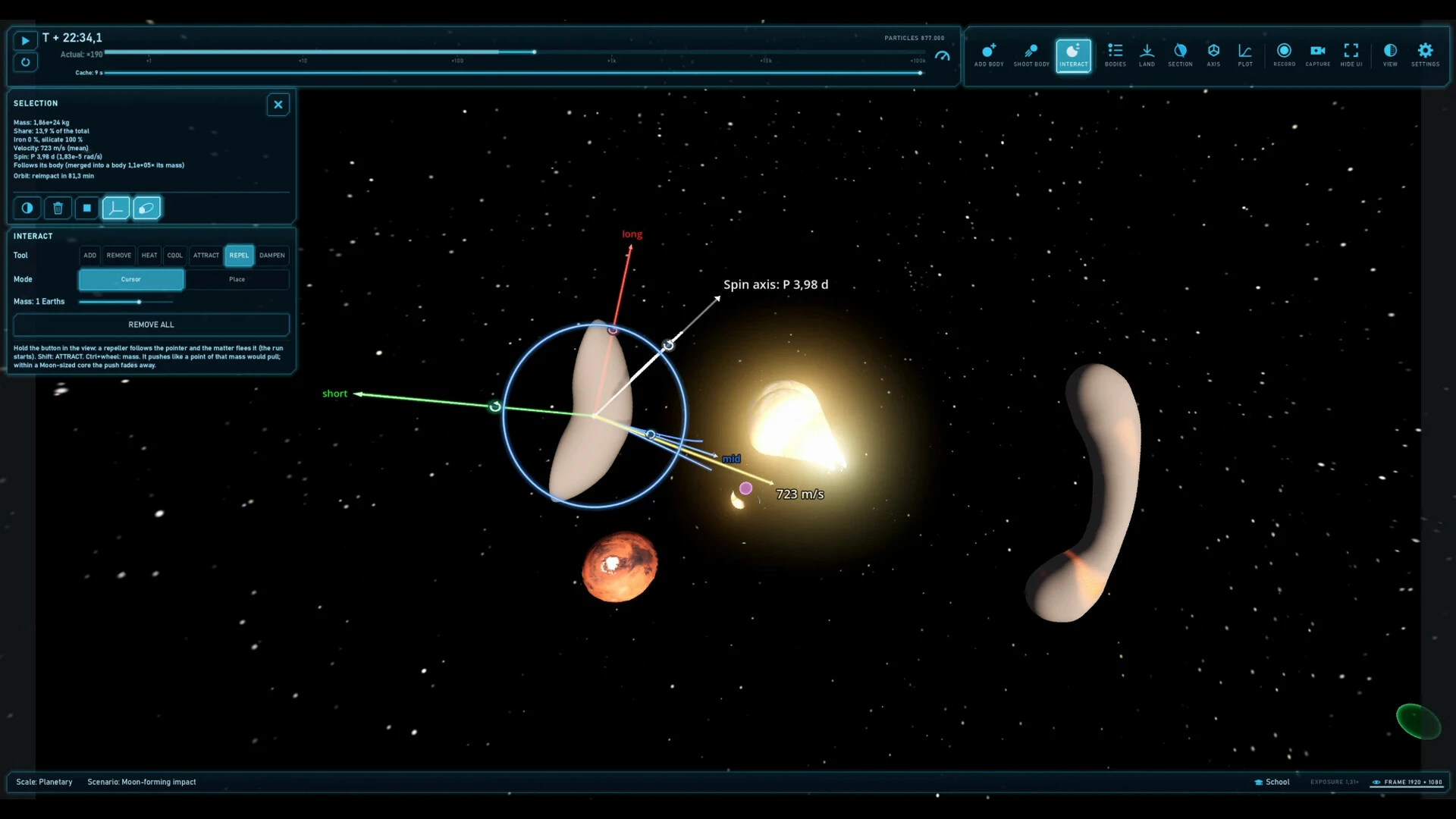
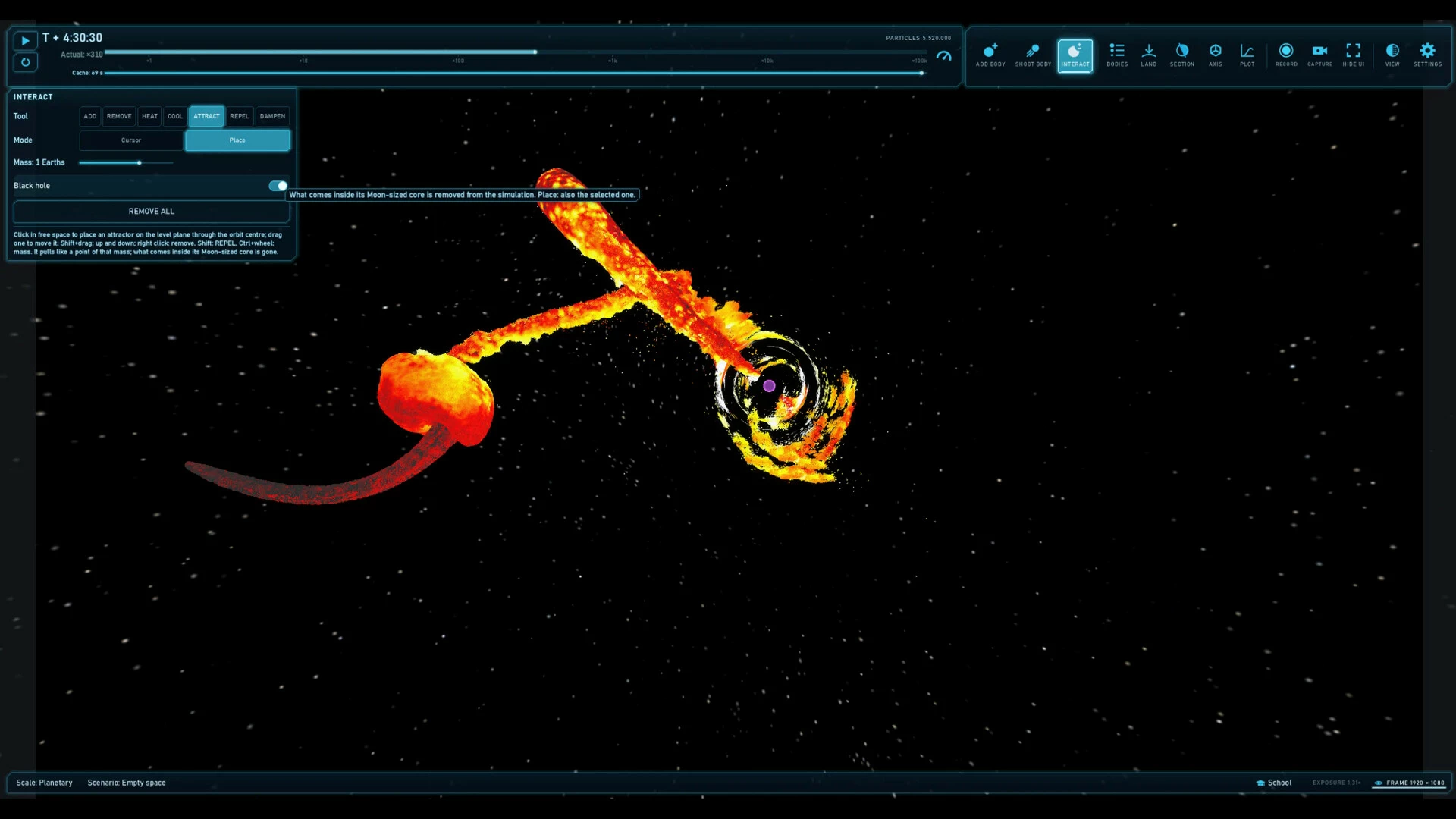
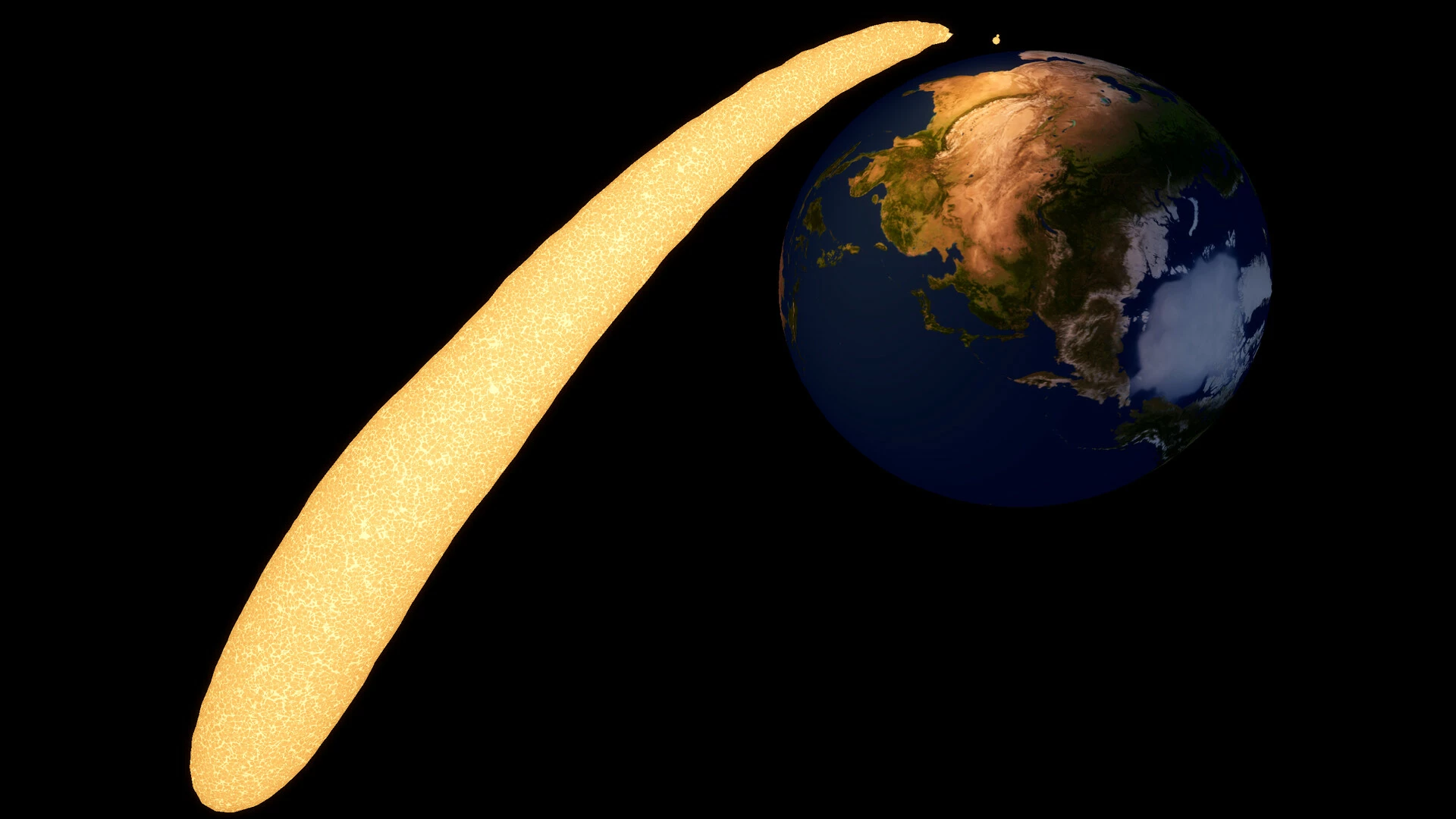
Gravity acts on every particle, so tides come for free. Send a planet on a close flyby and watch it stretch into an egg and leave spinning. Put a moon in a close orbit and see it turn one face to its planet, or watch a fast-spinning planet push its moon outward. Bodies that come too close are torn apart into streams of debris.
Build your own system
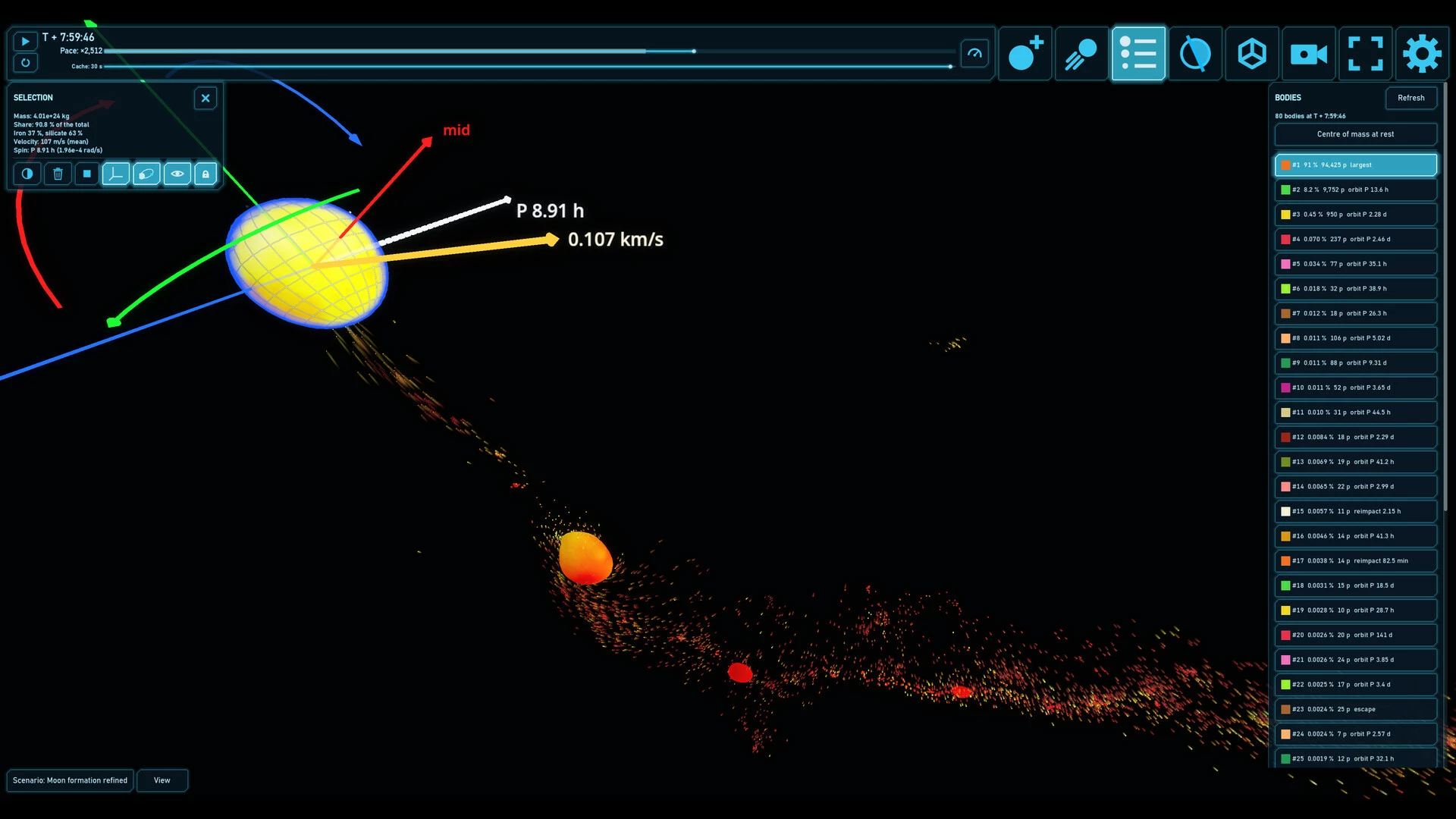
Start from empty space and add planets, the Moon or custom bodies. Put them in orbit, shoot a body at a planet, or select any clump and drag arrows to change its velocity and spin.
Look inside
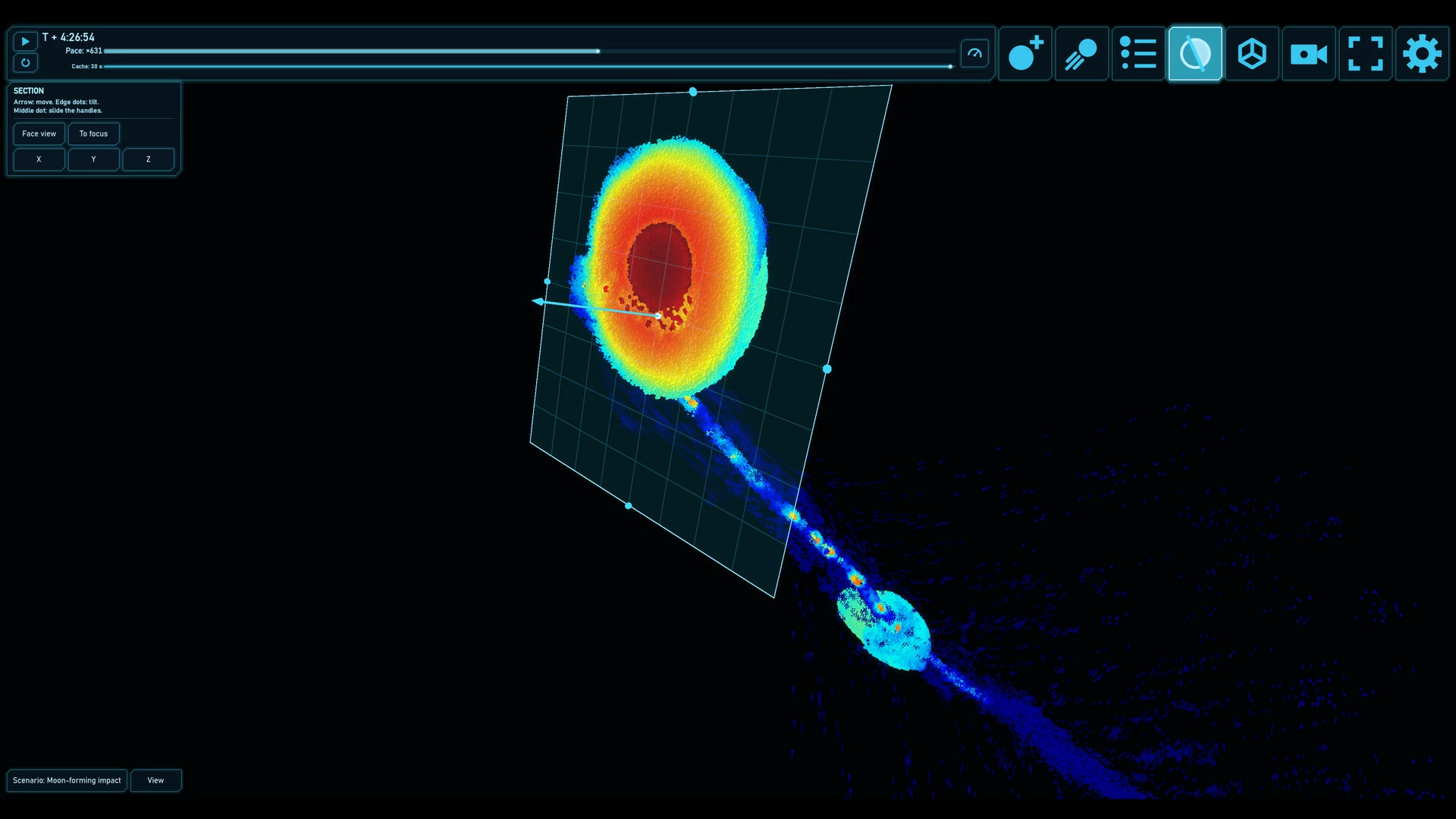
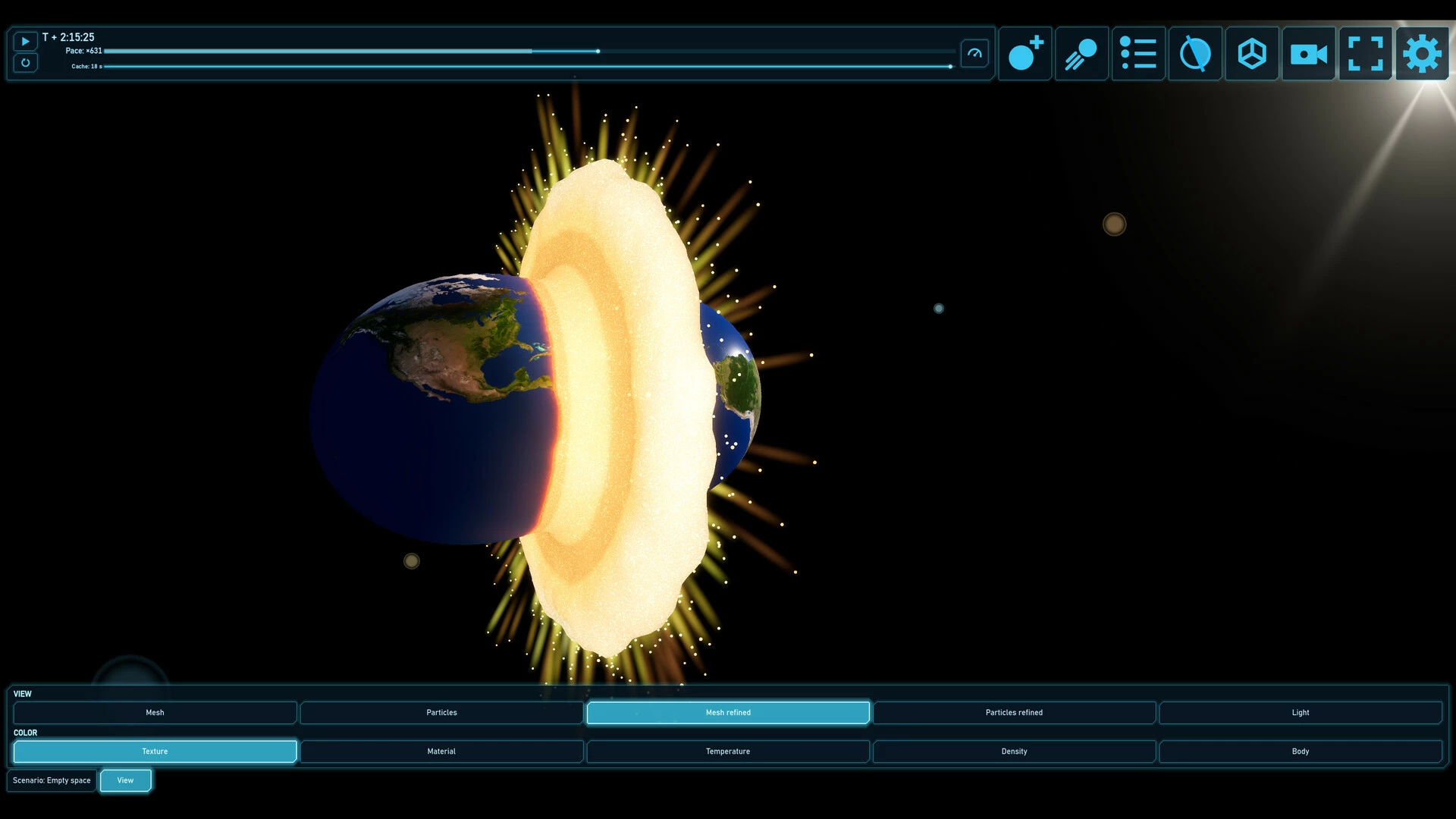
Cut the planets open with a section plane to see the iron core and the mantle. Color the material by type, temperature or density, or show realistic planet textures. Select any clump to see its mass, speed and spin.
Record and replay
Record the full simulation data, every particle in every frame, even for runs with millions of particles. Afterward, replay it from any angle at any speed: fly the camera around the impact, slow down the moment of contact or race through the hours of debris settling into a moon. Export the replay as a video, or save high-resolution pictures.
Make your own videos
Film high-quality videos straight from the game, as MP4 files up to 4K, with no screen recorder needed. Set camera keyframes on a replay and the camera flies smoothly between them, easing the pace to what you set at each one. Heavy scenes can be rendered offline frame by frame, so the video stays smooth even when your PC can't keep up in real time.
Control time
Pause, rewind the last moments, speed up or slow down the simulation. Choose anywhere from a few thousand to millions of particles to balance detail and speed.
How it works
Planets in a Box uses smoothed-particle hydrodynamics (SPH) with self-gravity, running entirely on your graphics card. Rock and iron follow their own equations of state, so planets compress, heat up and flow. Millions of particles are simulated, and many times more are drawn as fine surface detail and dust.
Realistic physics, in real time. Planets in a Box is made for exploring and learning: try an idea, watch what gravity and impacts do with it, and run it again.
No ads, no account, no microtransactions. Works offline.
- Если не установлен Steam клиент, скачайте его для Windows (клиент также доступен на Mac и Linux) и установите.
- Запустите Steam, зайдите в свой аккаунт или зарегистрируйте новый, если у вас его еще нет.
- При оформлении заказа, предоставьте ссылку на свой профиль в Steam или ваш SteamID состоящий из 18 цифр (765***).
- Ожидайте приглашения от нашего бота (если у вас аккаунт с ограниченными правами) или добавьте бота в друзья (ссылка на бота будет предоставлена после успешной оплаты).
- После того, как вы добавите нашего бота в друзья, игра автоматически (время ожидания обычно составляет не более 5-30 секунд) будет отправлена вам в виде подарка (гифта).
- Примите подарок, добавьте в Библиотеку и нажмите «Играть».









и мы вам напишем, если цена на этот товар снизится